
Zero-Deposit Room Rental in Malaysia: How It Works?
Zero-Deposit Room Rental in Malaysia: How It Works❓

Renting a room in Malaysia usually requires a significant upfront payment. Depending on the landlord or property manager, tenants may need to pay a security deposit, utility deposit and the first month’s rent before moving in.
For tenants who are starting a new job, relocating for university or moving to another city, this can be a heavy financial burden. A room that costs RM700 per month could require more than RM2,000 upfront.
That is why zero-deposit room rentals are becoming an attractive alternative. Instead of paying a large refundable security deposit, tenants may move in with a smaller upfront payment or use a deposit-replacement programme.
But how does zero-deposit rental actually work, and is it suitable for everyone? Here is what Malaysian tenants should know before signing an agreement.
What Is a Zero-Deposit Room Rental?
A zero-deposit room rental allows a tenant to rent a room without paying the traditional security deposit in full.
Under a conventional rental arrangement, tenants in Malaysia may be asked to pay:
- Two months’ security deposit
- Half a month’s utility deposit
- One month’s advance rental
- Tenancy agreement or administrative fees
With a zero-deposit arrangement, the security deposit may be replaced by a smaller, usually non-refundable fee, an insurance-backed protection plan, a guarantee programme or another payment arrangement offered by the landlord or property manager.
However, “zero deposit” does not always mean that no upfront payment is required. Tenants may still need to pay the first month’s rent, utility charges, agreement fees or a deposit-replacement fee.
Always check the complete move-in cost before confirming the room.
How Does Zero-Deposit Rental Work in Malaysia?
The exact process depends on the landlord, property manager or rental platform. A typical zero-deposit rental process may look like this:
1. Find a Room Offering Zero-Deposit Move-In
Search specifically for listings that mention:
- Zero deposit
- No security deposit
- Low move-in cost
- Deposit-free rental
- Flexible deposit payment
Not every room offers this option, so confirm the arrangement directly with the advertiser.
2. Submit Your Tenant Information
The landlord or property manager may request documents such as:
- MyKad or passport
- Employment letter
- Recent salary slip
- Student identification
- Work permit or visa for foreign tenants
- Emergency contact details
These documents help the property manager assess whether the tenant can meet the monthly rental commitment.
3. Complete the Eligibility Check
Some zero-deposit programmes require tenant screening. This may include verifying your employment, income, identity and rental history.
Approval is not always automatic. Tenants with stable income and complete documents may have a better chance of qualifying.
4. Pay the Required Move-In Amount
Even without a traditional security deposit, you may still need to pay:
- First month’s rent
- Deposit-replacement fee
- Utility activation or administration fee
- Tenancy agreement and stamping costs
- Access card or key deposit
Ask for an itemised breakdown so you know exactly what each payment covers.
5. Sign the Tenancy Agreement
The tenancy agreement should clearly state that the room is rented under a zero-deposit arrangement. It should also explain the tenant’s responsibilities, payment schedule, damage claims, notice period and move-out conditions.
Never rely only on verbal promises or WhatsApp messages.
Is Zero Deposit Completely Free?

Usually, no.
A zero-deposit rental removes or replaces the conventional security deposit, but other fees may still apply. Some programmes charge a smaller non-refundable fee, while others provide protection to the landlord through an insurance or guarantee arrangement.
For example, a traditional room rental might require:
| Payment | Conventional Rental | Zero-Deposit Rental |
| Monthly rent | RM700 | RM700 |
| Security deposit | RM1,400 | RM0 |
| Utility deposit | RM350 | Depends on provider |
| Deposit-replacement fee | RM0 | Depends on provider |
| First month’s rent | RM700 | RM700 |
This example is for illustration only. Actual charges vary by listing and provider.
The key advantage is lower initial cash outlay. However, tenants should compare the total cost because a deposit-replacement fee may be non-refundable, unlike a conventional security deposit that can potentially be returned after the tenancy.
Benefits of Zero-Deposit Room Rental
Lower Upfront Cost
The biggest advantage is affordability. Tenants do not need to prepare several months’ worth of rent before moving in.
Easier Relocation
Zero-deposit rooms can be helpful for fresh graduates, interns and employees moving to Kuala Lumpur, Petaling Jaya, Johor Bahru, Penang or other Malaysian cities for work.
More Cash for Essential Expenses
Instead of locking a large amount of money into a deposit, tenants can keep more cash available for transport, food, furniture and other moving expenses.
Faster Move-In Process
Some professionally managed rooms provide standardised documentation and payment procedures, making it easier for approved tenants to move in quickly.
Reduced Worry About Deposit Refunds
Deposit disputes can happen when tenants and landlords disagree about damage, cleaning or unpaid bills. A zero-deposit arrangement may reduce concerns about recovering a large deposit, although tenants remain responsible for legitimate costs.
What Are the Possible Disadvantages?
Some Fees May Be Non-Refundable
A traditional security deposit may be refundable after deductions. A zero-deposit programme fee, however, may not be returned when the tenancy ends.
Tenants Are Still Responsible for Damage
Zero deposit does not remove the tenant’s responsibility. If you damage the room, furniture or common facilities, the landlord may still claim the repair cost from you.
Stricter Eligibility Requirements
The provider may check your income, employment status or rental history before approving your application.
Late-Payment Penalties May Apply
Missing your rental payment could result in penalties or other action based on the tenancy agreement.
Not Every Listing Is Genuine
Be cautious of advertisements promising a completely free move-in without documentation. Verify the room, advertiser and payment details before transferring money.
What Should You Check Before Renting?
Before committing to a zero-deposit room, ask the following questions:
- What is the total amount required to move in?
- Is there a non-refundable zero-deposit fee?
- Are utilities included in the monthly rent?
- How are electricity and water charges calculated?
- Who is responsible for room damage?
- What is the minimum rental period?
- How much notice is needed before moving out?
- Are early termination charges applicable?
- Is the tenancy agreement officially stamped?
- Will I receive receipts for every payment?
You should also inspect the room and confirm that the photos match the actual property.
How to Avoid Room Rental Scams
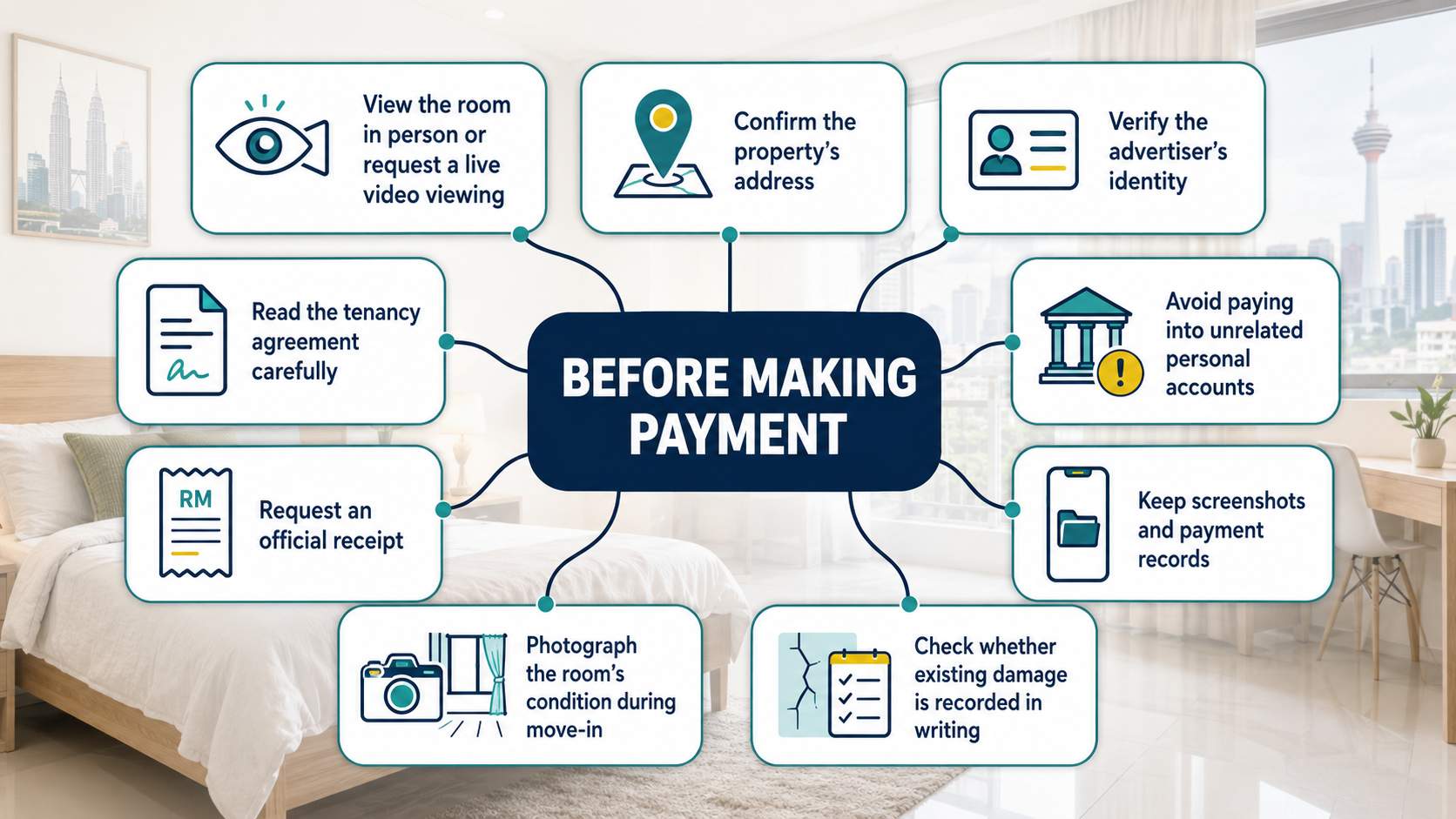
A low move-in cost can be attractive, but do not let urgency override basic safety checks.
Before making payment:
- View the room in person or request a live video viewing
- Confirm the property’s address
- Verify the advertiser’s identity
- Read the tenancy agreement carefully
- Avoid paying into unrelated personal accounts
- Request an official receipt
- Keep screenshots and payment records
- Photograph the room’s condition during move-in
- Check whether existing damage is recorded in writing
Be especially cautious if someone pressures you to transfer money immediately by claiming that many other tenants are waiting.
Who Should Consider a Zero-Deposit Room?
Zero-deposit room rental may be suitable for:
- Fresh graduates starting their first job
- University and college students
- Interns and trainees
- Employees relocating to a new city
- Tenants with limited upfront cash
- People seeking temporary accommodation
- Renters who prefer flexible financial arrangements
However, tenants who have sufficient savings and expect to stay for a long time should compare the total cost of both conventional and zero-deposit options.
Zero Deposit vs Traditional Deposit: Which Is Better?
The right choice depends on your financial situation.
Choose a zero-deposit room if your priority is reducing the amount needed to move in. It can provide valuable flexibility when you need accommodation quickly but do not want to lock away a large sum of money.
A traditional deposit may be more suitable if the deposit is refundable, you plan to stay long term and the total cost is lower than paying non-refundable programme fees.
Do not compare only the initial payment. Calculate the total cost over the entire rental period.
Find a Room for Rent in Malaysia
Finding the right room is about more than rental price. Location, house rules, facilities, utilities, security and move-in costs should all be considered.
On iBilik, tenants can explore room rental listings across Malaysia and compare available options based on location, budget and room type. Look for listings offering flexible move-in arrangements, and confirm all zero-deposit terms with the advertiser before making payment.
Whether you need a single room, middle room or master room, review the complete rental terms carefully and choose an option that suits both your lifestyle and budget.
Final Thoughts
A zero-deposit room rental can make moving more affordable by reducing the large upfront payment commonly associated with renting in Malaysia. It is especially useful for students, fresh graduates and working adults who want to preserve their cash flow.
Still, zero deposit does not mean zero responsibility or zero cost. Always check the complete fee structure, understand which payments are refundable and read the tenancy agreement before committing.
Ready to begin your room search? Explore rooms for rent across Malaysia on iBilik and find an option that matches your preferred location, budget and move-in requirements.