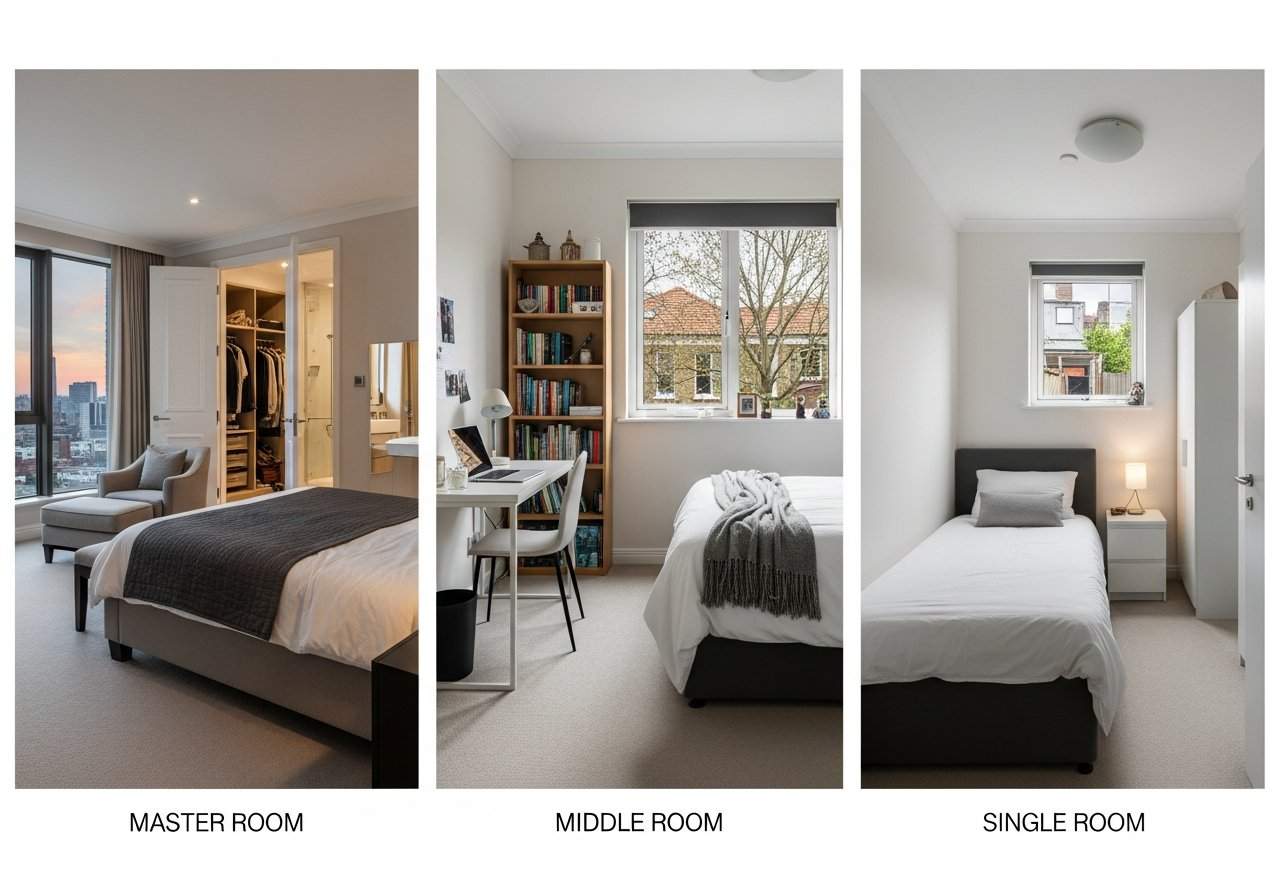
Key Differences: Master Room vs. Middle Room vs. Single Room
Choosing a room to rent can feel simple at first. Then you start comparing listings and realise every option comes with trade-offs. If you have been browsing room rentals in Malaysia, you have probably asked yourself whether you should rent a master room, a middle room, or a single room.
The right answer depends on more than just monthly rent. Your ideal room should match your budget, lifestyle, daily routine, privacy preferences, and how long you plan to stay. A student who only needs a place to sleep may not need the same setup as a remote worker or a couple looking for more comfort.
In this guide, we explain the practical differences between each room type, who each one suits best, and what to check before you commit to a tenancy.
What Do Master Room, Middle Room, and Single Room Mean?
In Malaysia’s rental market, these room categories are commonly used across condos, apartments, and landed homes. While layouts and furnishings vary by property, the terms generally refer to the size of the room, bathroom access, and level of privacy.
1. Master Room for Privacy and Comfort
A master room is typically the largest bedroom in the unit and is usually considered the premium option.
- Key Advantage: The attached bathroom or ensuite. This gives you more privacy and convenience.
- Space: In most cases, it can fit a queen-sized or king-sized bed comfortably, along with a larger wardrobe, work desk, and extra storage.
- Extras: Some units may include a balcony, better natural lighting, or more separation from common areas.
- Cost: Usually the most expensive room type.
Ideal if:
- You want your own bathroom.
- You work from home and need more space.
- You have more belongings or larger furniture.
- You are renting as a couple (subject to landlord approval).
2. Middle Room for Balance
A middle room is the in-between option. It offers more space than a single room but usually costs less than a master room.
- Setup: Can typically fit a queen-sized or super single bed with enough room for a desk and wardrobe.
- The Compromise: You will usually need to use a shared bathroom with one or more housemates.
- Value: Offers the most practical balance between comfort and affordability.
Ideal if:
- You want more comfort without paying premium rent.
- You do not mind sharing a bathroom.
- You need enough space for work, study, or moderate storage.
- You are a young professional or expat looking for value.
3. Single Room for Saving Money
A single room is usually the smallest room in the unit and is chosen by renters prioritising low monthly costs.
- Setup: Generally suitable for one person. Fits a single bed, a compact wardrobe, and a small desk.
- Bathroom: Shared with other tenants.
- Strategic Choice: Useful if you want to live in a prime location (near office/university/MRT) while keeping rent manageable.
Ideal if:
- You have a tight budget.
- You spend most of your time outside.
- You travel light or prefer a minimalist setup.
- Location is more important to you than floor space.
Key Factors to Consider Before Renting
Look beyond the base rent; these factors often have the biggest impact on your quality of life.
1. Monthly Budget and Upfront Costs
- Master: Highest rent.
- Middle: Moderate rent.
- Single: Lowest rent.
- Deposits: Always confirm the security deposit, utility deposit, and any administrative charges. Ask if they are refundable and under what conditions.
2. Bathroom Privacy
If you have an early work schedule or are very particular about cleanliness, a shared bathroom (Middle/Single room) requires coordination and shared cleaning standards. Ask how many people share the bathroom and if a professional cleaner is hired.
3. Space for Work and Rest
If you work remotely, the size of the room affects your mental well-veing. A larger room might be worth the extra cost if it allows for a proper desk setup and better movement space.
4. Utilities and House Rules
- Bills: Clarify if utilities (WiFi, water, electricity) are included or split. Some landlords charge extra for air conditioning usage.
- Rules: Check rules regarding cooking, overnight guests, quiet hours, and visitor policies to ensure compatibility with your lifestyle.
Which Room Type Is Right for You?
| Feature | Master Room | Middle Room | Single Room |
|---|---|---|---|
| Privacy | High (Private Bathroom) | Medium (Shared Bathroom) | Medium (Shared Bathroom) |
| Space | Large | Moderate | Compact |
| Cost | Premium | Moderate | Budget-friendly |
| Best For | Couples / WFH Pros | Value Seekers | Minimalists / Students |
Common Mistakes to Avoid
- Assuming Bigger is Better: Don't stretch your budget for a Master room if you won't use the extra space.
- Ignoring Ventilation: Small single rooms can feel stuffy. Check for proper windows and natural light.
- Overlooking Bathroom Conditions: If sharing, inspect the water pressure and drainage during your viewing.
- Skimming the Tenancy Terms: Ensure you understand the minimum stay, notice period, and deposit return process before paying anything.
Final Thoughts
The best room is not necessarily the biggest one. It is the one that supports your routine, finances, and comfort level over time.
Before you make a final decision, compare listings carefully, ask the right questions, and think beyond the monthly rent.